Tuesday, November 30, 2010

Lamborghini Reventon Wallpaper

Lamborghini Reventon

Ferrari California Wallpaper picture


Ferrari California WallpaperFerrari California Wallpaper

Ferrari California car WallpaperFerrari California car Wallpaper

Ferrari CaliforniaFerrari California

Maserati Granturismo

Maserati Granturismo
Maserati Granturismo Cars
Maserati Granturismo
Maserati Granturismo Wallpapers

Volkswagen Golf 2010

Volkswagen Golf 2010

Volkswagen Golf 2010

Volkswagen Golf 2010 Cars
Volkswagen Golf 2010 Wallpapers

Exotic Volkswagen EcoRacer Prototype Impressive Performance

http://anto-reace.blogspot.com/
Exotic Volkswagen EcoRacer Prototype impressive performance

Exotic Volkswagen EcoRacer Prototype impressive performance Exotic Volkswagen EcoRacer Prototype impressive performance

At the Tokyo Motor Show (22 October to 6 November) Volkswagen are presenting a ancestor that could able-bodied accomplish history as the best economical the sports car of its time. Its basal data: boilerplate ammunition burning of 3.4 litres for 100 km, a top acceleration of 230 kph. Its name: EcoRacer. Thanks to its carbon-fibre (CFP) bodywork, this sports car with its centrally amid agent weighs in at alone 850 kilograms, and accelerates from 0 to 100 kph in aloof 6.3 seconds. Powered by a anew developed 100-kW turbo-charged agent of the abutting generation, it offers a advanced amalgam of ascetic abridgement and absorbing performance. 230 kph, 6.3 seconds, 3.4 litres - these basic statistics are as abnormal as they are fascinating. But the cold of development was not to breach records. With the EcoRacer, the ambition was rather to actualize a analysis agent that affiliated the elements of abridgement and achievement beneath a actual emotionally styled "roof".

GIRL AND CAR

GIRL AND CAR
GIRL AND CAR
GIRL AND CAR
GIRL AND CAR
GIRL AND CAR
GIRL AND CAR
GIRL AND CAR
GIRL AND CAR
GIRL AND CAR
GIRL AND CAR
GIRL AND CAR
GIRL AND CAR
GIRL AND CAR
GIRL AND CAR
GIRL AND CAR
GIRL AND CAR

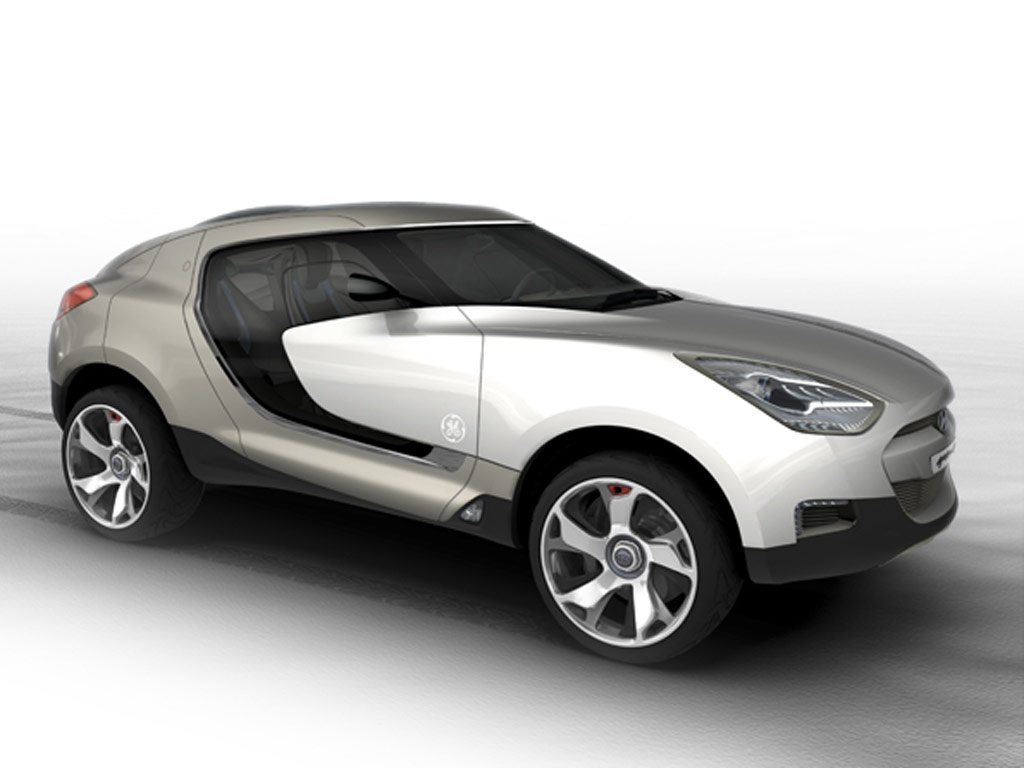
NEW CAR CONCEPT : HYUNDAI QARMAQ

NEW CAR CONCEPT : HYUNDAI QARMAQ
HYUNDAI QARMAQ
SPORT
HYUNDAI QARMAQ

Hyundai has presented at the Geneva Show the series model i30 hatchback and the new QarmaQ concept.The crossover Concept, which has been announced in a sketch published a few weeks ago by Hyundai, brings an important change of approach in what concerns the materials used in its composition.
While the traditional cars use metal and glass, QarmaQ is assembled from plastic materials made by GE Plastics. The QarmaQ concept is the result of the cooperation between the 2 companies and brings, as novelty, a vista of the kind that only a view from the chopper gives, because of the great surface of the plasticized windows from the car's body.
By integrating GE's polycarbonate glazing wrap-around and the GE Lexan windscreens, the body weight of the cars is reduced by almost 50 %. A unique technology characterizes Lexan screens: Exatec Technology. It' s a technology through which a thin, protective layer of glass is deposited on the screen, which helps when protecting from scratching or effects of humidity. The material, much lighter than traditional glass used in automotive industry, also increases the impact resistance and both occupant and pedestrian safety. When talking about pedestrian safety, we can also mention the system that uses deformable sections under the concept's body panels, which is able to absorb crush energy in case a collision with a person may happen.
GE Plastics' High Performance Thermoplastic Composite (which is used for the horizontal body panels) manages to also save some weight. 900 recycled plastic bottles have been used when manufacturing other body panels.
The new concept is a showcase of 30 new technologies that will be found in the future Hyundai models. The car is the result of the hard work of Hyundai Motor Europe's Design and Technical Center and it has been engineered in cooperation with GE Plastics. It will be ready to roll in 2008 to 2014.

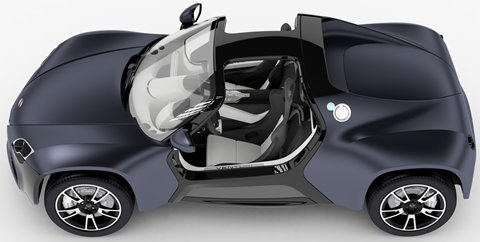
NEW CAR CONCEPT: VENTURI AMERICA 2011

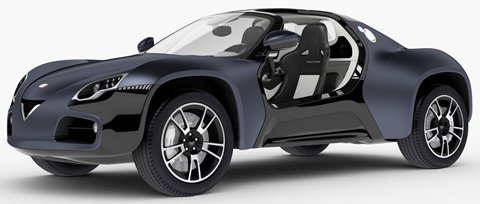
NEW CAR CONCEPT: VENTURI AMERICA 2011
VENTURI AMERICA 2011
NEW CAR CONCEPT: VENTURI AMERICA 2011
VENTURI AMERICA 2011
is it possible for an electric car to achieve the performance of a gas-powered sports car? French automobile manufacturer Venturi asked the same question and came up with an answer – yes, a 'green sports car' can be done. The company presents its newest achievement, the new Venturi America. Venturi has thrown in this vehicle its years of specialization in electric propulsion, high performance and state-of-the-art car technologies.

The Venturi America uses a new generation of electric motor, called the VM300, which is capable of producing 300 horsepower (with 220 kilowatts) and 380 Nm of torque. Apparently, it is the most advanced electric motor ever made for a car. To add to the motor power, Venturi adds a new 54 kWh LIV-10 Lithium Ion Polymer battery pack; and incredibly, it can be recharged using fast charge terminals or even a standard electrical socket. The Venturi America has a range of 300 km (or about 185 miles).

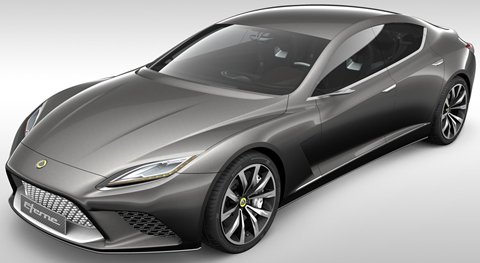
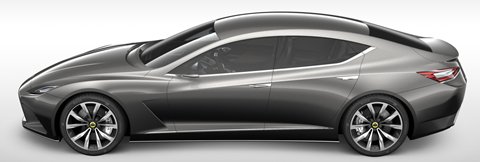
LOTUS ETERNE 2015

SPORT CARS: LOTUS ETERNE 2015
LOTUS ETERNE 2015
SPORT CARS: LOTUS ETERNE 2015
LOTUS ETERNE 2015


The British sports car manufacturer Lotus redefines elegance for the future, introducing the all-new 2015 Lotus Eterne. It is the company's next iconic four-door, four-seater sports GT. A car of the future, Lotus describes it as the highest epitome of refinement, sophistication, power and strength. Designed to compete against the Aston Martin Rapide and the Porsche Panamera, elegance and motorsports thrill are combined in the 2015 Lotus Eterne.

This vehicle is equipped with a 5.0 liter pressure-charged V8, but an option for a hybrid engine is also available. It runs from 0-62 mph in 4 seconds, and achieves a top speed of 196 mph. The 2015 Lotus Eterne has 612 horsepower and 531 pound feet of torque; it uses 122.4 horsepower per liter. It weighs about 4,000 pounds, which is not quite a lightweight. As for the price, it has a price of approximately $190,000.
in Lotus

Monday, November 29, 2010

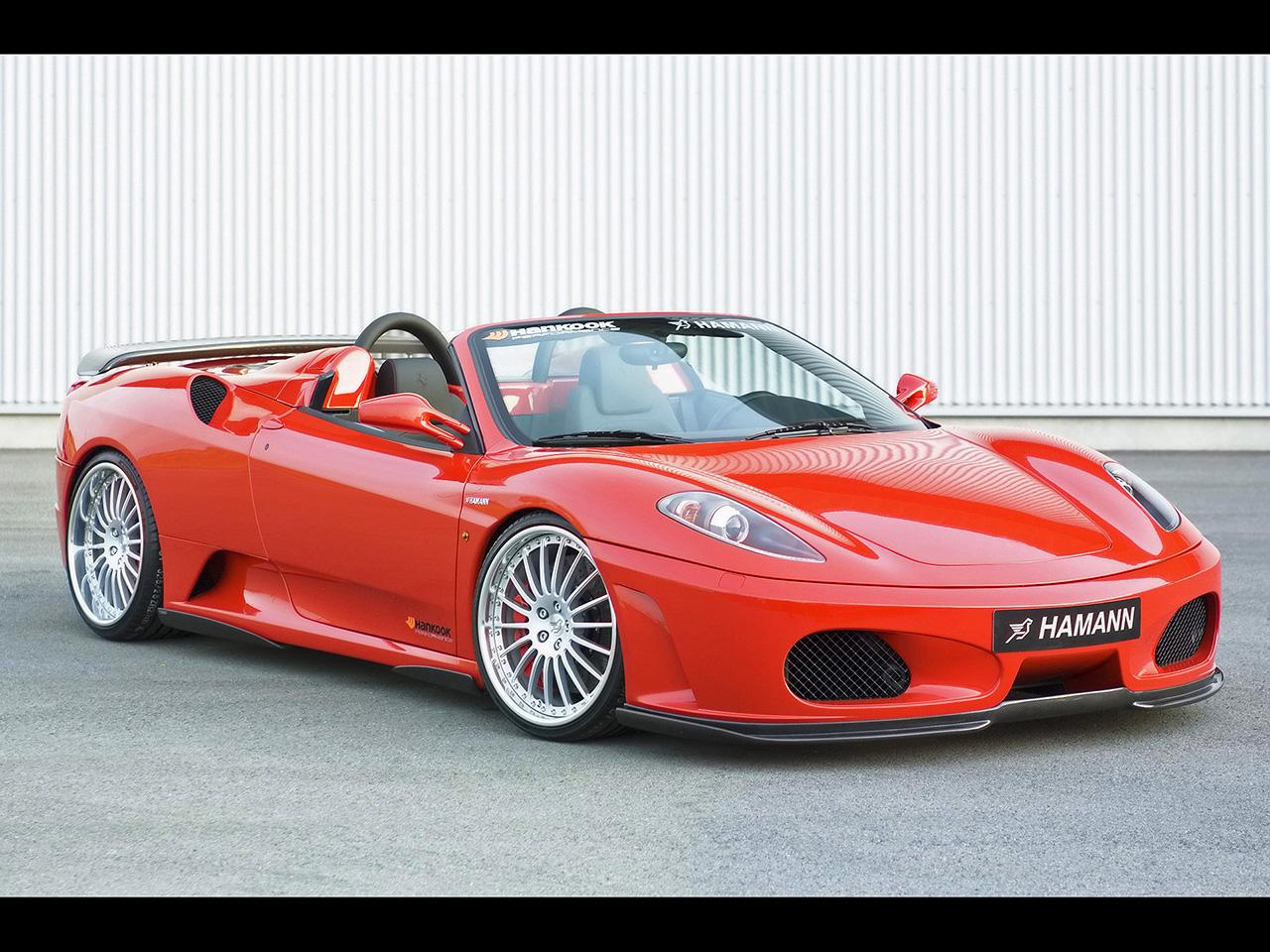
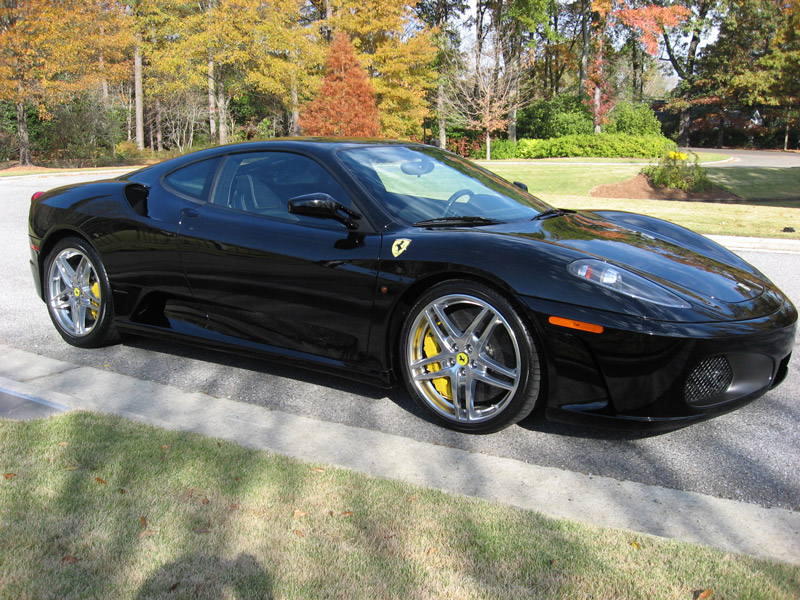
ferrari f430

The car saves effectively on weight to excel in speed, and its curb weight is approximately 1,225 kg. In the cockpit, Ferrari have removed all excessive luxuries that might increase the weight of the car. There are no stereos, speakers or even carpets in the Ferrari F430 Challenge and even the standard seats have been replaced by seats that are exclusively designed for racing. Even the steering wheel of the car has been replaced by a racing edition of the wheel.

There are buttons available on the dash board to provide communication with the radio in the pit, and an interface option with the digital instrument display is also an availability. The car also features a full roll cage and harnesses for racing in the cockpit to provide better safety while driving at a fast speed. The stability system, as well as the traction control system has both been disengaged permanently from the Ferrari F430 Challenge. You can spot modifications that have been made to facilitate in racing in the car everywhere, and even the E differential of the car has been replaced by a mechanical version.

Even the suspension modules of the Ferrari F430 Challenge have been modified to facilitate racing. The engine of the car is the same one that was used in the Ferrari F430, which is the 90° 4.3 liter V8. Just like its counterpart, the Ferrari F430 Challenge produces the same output, which rests at 483 hp. However, the engine of the car has been modified to include Double Overhead Camshafts, and it contains 4 valves in every cylinder. Natural aspiration has been, and always was, used in the car.

ferrari f430
ferrari f430
ferrari f430
ferrari f430
ferrari f430 wallpapers
ferrari f430
ferrari f430
ferrari f430 pictures

Diesel-electric powered 2009 BMW Vision

Good news, Revealed Diesel-electric powered 2009 BMW Vision EfficientDynamics Concept
And here we have it, BMW’s secretive concept car with the radical rear tail lamps set for its Frankfurt showcase unveiled before the show – the BMW Vision EfficientDynamics. If you’ve been following the motoring scene closely you’ll remember back in early 2008 there was another concept car with the exact same name but with a much less radical body. Come to think of it the design was probably inspired by the GINA concept. 2008’s Vision EfficientDynamics Concept was built using the body of an X5 but featured a 2.0 liter twin turbodiesel (from the 123d) with 204hp mated to a 15kW electric motor.


Modifikasi Honda Transformer

Although not like Surabaya or Malang, Banjarmasin city appeared to have a motorcycle modifikator reliable. Modifikator origin Banjarmasin success siphon attention of thousands of visitors in the event Otocontest Honda Series (HOCS) 2009,

Title in the city of Banjarmasin this series is a contest to 8-modification Honda in Indonesia.

"In Banjarmasin, the motor modifications nge-trend, a Honda. No other brand motorcycle that performs the modifications in the event here. So this is proof that Honda always want to provide the best care to clients and, "said Antonius silitonga a familiar called Pak Anton as GM's Trio Motor, Main Dealer Honda Motorcycles & Central Kalimantan South Kalimantan region.

He also added, the title of this, it can be proved that the Honda motor is the most suitable for modification fans.

Mazda-Ryuga Concept Car

The Ryuga accommodates four cartage in archetypal 2+2 seating, with advanced brazier seats and a lounge-like rear commuter area.
A "floating" centermost array with continued pods includes a multi-function blow console for controls and displays. A set of charge-coupled accessory (CCD) cameras are installed for ecology the aback appearance and blind-spot.
The council caster is an accessible top style, which utilizes steer-by-wire technology.


Sunday, November 28, 2010

Peugeot 308 RC Z Concept

The 308 RC Z concept car is a new Peugeot interpretation of driving pleasure. The car is a 2+2 coupé, with true versatility and at the same time a style that is modern, original and well-balanced.

Using the 308 as a blueprint.
* to adopt a particularly stylish front design;
* to share a large number of components already developed for the hatchback, therefore simplifying the production of this coupé;
* to capitalise on the hatchback's strong points, which become even more effective in the 308 RC Z concept car (for example, suspension components, wheels, certain equipment items and the fl owing design of the fascia panel).

Its taut lines and streamlined design ensure an efficient aerodynamic specification (a SCx of just 0.65), improving performance, fuel consumption and therefore helping to protect the environment due to the reduced CO2 emissions.
With a length of 4.276 (same as the hatchback), a width of 1.840 (25 mm more than the hatchback) and a height of only 1.320 m, the proportions of the 308 RC Z concept car combines a very dynamic design with a high level of road holding.

Exterior styling
The particularly stylish design of the front of the 308 blends brilliantly with the proportions of this concept car.

From the side, the vehicle displays a strong profile with its prominent front wings, deeply sculpted sides, and particularly generous rear wings. The doors raise the visual profile, creating a link between the sloping front design and the curvaceous rear design.
The end result, firmly sitting on 19 inch wheels, suggests power, strength and dynamism, like an animal ready to pounce.

The specific shape of the rear window required the use of polycarbonate instead of glass. The two curved sections emerging from the roof give the vehicle an original appearance and contribute greatly to its aerodynamic efficiency. The design of the tailgate assists the airfl ow over the rear of the vehicle, while the shape of the rear of the vehicle provides sufficient down force onto the rear suspension to eliminate the need for a rear spoiler, thereby preserving the purity of the vehicle's lines.
The Peugeot Lion badge is displayed in a U shaped panel in the centre of the tailgate, and is backlit at night. In addition, simply by pressing the lion badge, opens the tailgate.

The rear lights are mounted fl ush with the car's wide rear wings. Fitted with light emitting diodes (LEDs), they have a ruby red finish combined with a stylised translucent section which contains the direction indicator.
Two centrally mounted exhaust pipes are integrated into the wraparound lower rear panel. To achieve this, the rear exhaust silencer has been located in a transverse position where it also serves as an aerodynamic diffuser, but still allows sufficient space for the storage of a spare wheel.
The rich metallic grey exterior body colour is created by a special process using finely milled metallic particles. This gives the impression that the vehicle has been formed from a single block of metal, enhancing the purity of the car's lines and the styling of the bodywork to remarkable effect.
The interior
The fascia panel in 308 RC Z concept car has been taken directly from the hatchback. A pure, elegant and fl uid design, it allows a particularly clear view of the outside thanks to its sloping design which complements the vehicle's large front windscreen. It offers a high level of interior brightness, improved visibility and an overwhelming feeling of space.

The entire fascia panel is trimmed in leather, while the use of chrome, aluminium and black lacquered fittings creates a sporty, upmarket impression.

Another sign of the vehicle's exclusive nature are the bucket type front seats with polished aluminium eyelets, the style of which is also refl ected in the design of the inner door panels. The ergonomically designed driver's seat ensures the driver is firmly in control of the vehicle.
At the rear there are two occasional seats trimmed in leather, both of which can be folded. The vehicle therefore offers real modularity and great versatility.

The engine
The 308 RC Z concept car is powered by a 1.6 litre THP engine developed from the EP6DTS engine designed and developed via the collaboration between PSA Peugeot Citroën and the BMW Group, where it is fitted to the 207 RC, with a power output of 128 kW (˜175 bhp).
However, the 1.6 litre THP engine, as a result of new engine management software specially developed for the concept car, now produces a maximum power of 160 kW (˜218 bhp).
It is characterised by incredible fl exibility, thanks to its maximum torque of 280 Nm produced at a low engine speed (300 Nm in overboost). These values ensure remarkable responsiveness under all driving conditions.

Its innovative Twin-Scroll turbocharger optimally pairs the exhaust gases fl owing from two cylinders to ensure maximum fl ow onto the turbine, while its high-pressure direct petrol injection system improves combustion and overall engine efficiency.

The engine is coupled with an entirely new 6 speed manual gearbox.
This unit helps to give the 308 RC Z a particularly efficient compromise between performance and fuel consumption. For example, its maximum speed of 235 km/h is attained in sixth gear and it takes only 7.0 seconds to go from 0 to 100 km/h. In gear acceleration is impressive: only 7.5 seconds in 5th gear from 80 to 120 km/h. At the same time, fuel consumption is very reasonable with 6.7 litres/100 km in the combined cycle, or just 160 g/km of CO2 emissions.

Wheels and suspension
In the tradition of Peugeot concept cars there is a linked front suspension employing the widespread use of aluminium to reduce the vehicle's overall weight.
This set up ensures exceptional road holding, excellent steering accuracy and great feedback intensifying the overall driving sensation.
The rear suspension, derived from the hatchback, consists of a torsion-beam, two rear suspension arms and an integral anti-roll bar. It has been specially modified to take account of the wider vehicle tracks. Indeed the front and rear tracks have been increased by 59 mm compared to the hatchback, and also the fitment of wider tyres, ensures maximum body rigidity, precision and vehicle stability.
Braking relies on large (360 mm) diameter ventilated discs at the front with four piston calipers.
Polished split rim 19'' alloy wheels are fitted with Michelin Pilot Sport PS2 245/40 R19 tyres.

Safety
Even for a unique model, Peugeot's designers do everything they can to make their dreams become a reality and leave nothing to chance. Safety is also made a top priority.
While the exceptional road holding of the 308 RC Z concept car forms the basis of its primary safety, it is supplemented by safety equipment borrowed from the 308 hatchback, Lane Departure Warning System (LDWS) and the directional bi-Xenon headlamps.
Related Posts Plugin for WordPress, Blogger...